
Start building your Alabama driving foundation.
Use the self-paced online course to study Alabama traffic rules, safe driving practices, and defensive driving concepts before and during your supervised practice.

ONLINE TEEN DRIVER EDUCATION
FLEXIBLE ONLINE DRIVER EDUCATION
FOR NEW DRIVERS IN ALABAMA.

Take the course on any device. Your progress is saved automatically.
Use the self-paced online course to study Alabama traffic rules, safe driving practices, and defensive driving concepts before and during your supervised practice.
Review the Alabama Driver Manual material and use the available practice tools to prepare for the written knowledge test before visiting an Alabama Law Enforcement Agency driver license office.
Pass the Stage I written examination, complete either the required 50 hours of supervised driving or an approved Alabama driver education alternative, then take the road skills test when you are eligible for a Stage II restricted license. (alea.gov)
Choose the course that fits your Alabama learning goals.
Compare approval, the total cost, and the help you’ll get along the way.
Review current Alabama options and prices.
Ask what’s included before you enroll.
Take the next step toward confident driving in Alabama.
Find your course and start building good habits.
Review your course details and price before you enroll.

Short study sessions that fit around school and family life.
Pick up where you left off, on your own schedule.
Review your course and completion details before you enroll.
Our team can help with course, account, and certificate questions.
Quick answers for Alabama teens and parents.
Find more help on our full FAQ page.
You can apply for a Stage I learner's license beginning at age 15. You must meet ALEA's documentation requirements and pass the required written examination. (alea.gov)
Not necessarily. Alabama allows an eligible teen to satisfy the Stage II training requirement with either at least 50 hours of supervised driving or completion of an SDE-approved driver education course. (alea.gov)
No. Only an Alabama State Department of Education-approved driver education course can serve as the alternative to the 50-hour supervised-practice requirement. A supplemental online course does not automatically qualify. (alea.gov)
ALEA stands for the Alabama Law Enforcement Agency. ALEA issues Alabama learner's licenses and driver licenses and administers the state's Graduated Driver License system. (alea.gov)
You must meet Alabama's documentation and school-status requirements, complete the required vision screening, and pass the written examination. A Stage I license is available beginning at age 15. (alea.gov)
No. A qualified parent, guardian, licensed driver age 21 or older, or licensed or certified driving instructor must be seated beside you in the front. (alea.gov)
The standard supervised-practice option requires at least 50 hours of behind-the-wheel practice. Alabama also permits an SDE-approved driver education course as an alternative to the 50-hour requirement. (alea.gov)
You must be at least 16. If you are under 18, you must also have held your Stage I license for at least six months, completed the required practice or approved driver education option, obtained the required permission, and passed the road skills test. (alea.gov)
You may not have more than one passenger who is not a parent, legal guardian, or family member. (alea.gov)
Generally, no. Stage II drivers may not drive from midnight to 6 a.m. unless an Alabama exception applies, such as qualifying work, school, religious, emergency, or supervised-driving circumstances. (alea.gov)
You may not use a handheld communication device while driving with a Stage II license. Keeping your phone out of your hand is also an important way to reduce distracted driving. (alea.gov)
You can qualify for Stage III at age 17 after holding your Stage II license for at least six months. (alea.gov)
A violation of Alabama's graduated driver license restrictions can extend the restricted period by six months or until you turn 18. Certain moving violations or serious offenses can also lead to a 60-day suspension. (alea.gov)
No. An online course does not replace the ALEA written or road skills examinations. If you intend to use a driver education course instead of the 50-hour practice requirement, verify that the course is approved by the Alabama State Department of Education. (alea.gov)
Alabama requires minimum liability coverage of $25,000 for bodily injury or death of one person, $50,000 for two or more people, and $25,000 for property damage in an accident. (revenue.alabama.gov)
Licensing information: Alabama Law Enforcement Agency →
Find your next step, or get help from our team.
Alabama uses a three-stage Graduated Driver License system for younger drivers. You can obtain a Stage I learner's license beginning at age 15, move to a Stage II restricted license at 16 after meeting the required conditions, and become eligible for a Stage III unrestricted license at 17 after holding the Stage II license for at least six months. (alea.gov)
Driver education is not the only way to meet Alabama's training requirement. Before moving to Stage II, an eligible teen can provide verification of at least 50 hours of supervised behind-the-wheel practice, or submit documentation showing completion of an Alabama State Department of Education-approved driver education course. (alea.gov)
The basic progression is:
At age 15, you can apply for an Alabama Stage I learner's license. You must pass the written examination, which is based on the Alabama Driver Manual. You also need to meet Alabama's identification and school-status requirements. (alea.gov)
For a 15-year-old learner's license, ALEA lists a certified U.S. birth certificate, Social Security card, acceptable proof of school enrollment or graduation, two proofs of principal residence, and the applicable testing and license fees among the required documentation. (alea.gov)
You will also complete the required vision screening and written examination. The Alabama Driver Manual is the state's source for the material covered on the written test. (alea.gov)
Your Stage I license does not allow you to drive alone. You must have a parent, legal guardian, or licensed driver who is at least 21 years old seated in the front beside you. A licensed or certified driving instructor may also supervise you from the front seat. (alea.gov)
Before receiving a Stage II restricted license, Alabama requires documentation of your driving preparation. There are two ways to satisfy this part of the process:
The 50-hour option must be verified by an eligible parent, grandparent, legal guardian, or certified driving instructor. The approved driver education option requires documentation supplied through the Alabama State Department of Education. (alea.gov)
This distinction is important when choosing an online course. An online driving course is not automatically an Alabama-approved driver education program. If a course is not approved by the Alabama State Department of Education, completing it does not replace the 50-hour requirement.
Teendrivingcourse can be used as an online resource for learning Alabama driving rules, safe driving concepts, and defensive driving principles. The course can provide additional preparation before you begin driving and while you work through your supervised practice.
However, Teendrivingcourse should not be presented as an Alabama-approved driver education provider unless its specific Alabama program has been confirmed as approved by the appropriate state agency. Alabama recognizes an SDE-approved driver education course as an alternative to the 50 hours of supervised practice, so approval matters if you intend to use driver education to satisfy that requirement. (alea.gov)
If you use Teendrivingcourse as a supplemental learning resource, you still need to complete the Alabama licensing requirements that apply to you, including the written examination, supervised practice or approved driver education, and road skills examination.
The first licensing test is the written examination based on the Alabama Driver Manual. It covers the traffic laws, rules, road signs, and safe-driving information you are expected to understand before receiving your learner's license. (alea.gov)
Study the current Alabama Driver Manual before taking the test. Practice questions can also help you become familiar with the types of information you need to recall under test conditions.
Teendrivingcourse's Alabama course is intended to provide additional study and driving-safety preparation. If the course includes access to Alabama-specific practice materials or other preparation tools, verify the current availability and terms before relying on those features.
Once you receive your Stage I license, you can begin supervised driving practice. Your supervising driver must meet Alabama's requirements and remain seated beside you in the front seat. (alea.gov)
Use your practice time to build skills gradually. Work on vehicle control, turns, lane changes, stopping, following distance, right-of-way decisions, parking, traffic awareness, and driving in different road and weather conditions.
If you are following the 50-hour practice pathway, make sure the required hours are accurately recorded and completed before you apply for Stage II. The 50-hour requirement is a minimum, so additional practice can be useful before taking the road skills test.
When you are at least 16, you may apply for a Stage II restricted license if you meet Alabama's requirements. If you are under 18, you must have held your Stage I license for at least six months. You must also have completed the required 50 hours of supervised practice or the approved driver education alternative, obtained the required parental or guardian permission, and passed the road skills examination. (alea.gov)
The Stage II license allows you to drive without a supervising adult, but it is still subject to important restrictions. Understanding those restrictions before you receive your license can help you avoid violations that extend the graduated licensing period. (alea.gov)
A Stage II restricted license gives you more independence, but Alabama limits certain driving activities while you are in this stage.
You may not have more than one passenger in the vehicle who is not a parent, legal guardian, or family member. In practical terms, you generally cannot drive around with multiple friends who are not family members. (alea.gov)
You generally may not drive between midnight and 6 a.m. unless an applicable exception applies. Exceptions include being accompanied by a parent or legal guardian, being accompanied by a qualifying licensed driver with parental consent, traveling to or from work or certain school or religious events, or driving for specified medical, fire, or law-enforcement emergencies. (alea.gov)
Stage II drivers may not use handheld communication devices while driving. This is a specific restriction that applies during the graduated licensing period. (alea.gov)
Keep these restrictions in mind every time you drive. Violating the graduated driver license restrictions can extend the restricted period by six months or until you reach age 18. (alea.gov)
At age 17, you can qualify for a Stage III unrestricted license after holding your Stage II license for at least six months. The Stage II period must meet Alabama's applicable requirements before you move to the unrestricted stage. (alea.gov)
Alabama's graduated system is designed to give young drivers time to gain experience before they receive unrestricted driving privileges. Following the restrictions during Stage II helps you progress through the system without unnecessary delays.
Alabama treats violations of the graduated driver license restrictions seriously. A violation can extend the restricted period by six months or until you turn 18. (alea.gov)
Certain moving violations and serious offenses can also result in a 60-day automatic suspension. ALEA states that this can occur after a second moving traffic violation or convictions for specified offenses, including racing, fleeing or attempting to elude, reckless driving, illegal passing, driving on the wrong side of the road, or another offense carrying four or more points. (alea.gov)
The consequences make your first years of driving especially important. Follow the restrictions, obey traffic laws, and continue practicing safe driving habits after receiving your restricted license.
Alabama has restrictions on wireless communication devices while driving. The Alabama Driver Manual identifies Alabama's hand-free law separately from the special handheld-device restriction that applies to Stage II drivers. (alea.gov)
For a Stage II driver, the rule is straightforward: do not use a handheld communication device while driving. Keeping your phone out of your hand also reduces a major source of distraction while you are still developing driving habits. (alea.gov)
Alabama requires vehicles operated on public roads to maintain the required financial responsibility coverage. The state's mandatory liability insurance minimums are:
These are minimum legal limits. Families adding a new teen driver should review their insurance policy with their insurer and determine whether additional coverage is appropriate.
The road skills examination is required before a teen can receive a Stage II restricted license. The test evaluates whether you can safely operate a vehicle and demonstrate the driving skills expected of a licensed driver. (alea.gov)
Practice the skills that you will use every day, including vehicle control, turns, stopping, lane positioning, traffic awareness, and other safe-driving techniques. Use the Alabama Driver Manual and ALEA's road-test preparation materials as your primary sources for current testing information. (alea.gov)
Before taking the test, make sure your practice requirement or approved driver education requirement has been completed and documented. You must also meet the applicable age and permit-holding requirements for Stage II. (alea.gov)
An online course can give you a convenient way to study driving rules and safe-driving concepts outside of your supervised practice sessions. You can use what you learn online as a foundation before you begin driving and as a refresher while you gain real-world experience.
For Alabama teens, it is important to distinguish between a supplemental online driving course and an SDE-approved driver education program. Alabama specifically recognizes completion of an SDE-approved driver education course as an alternative to the 50 hours of supervised practice. (alea.gov)
Teendrivingcourse's Alabama course should therefore be treated as a supplemental learning option unless its Alabama approval status has been specifically confirmed. It does not replace the ALEA written or road skills examinations.
Build confidence one question at a time. Try a few practice questions, then keep preparing for your Alabama knowledge test.
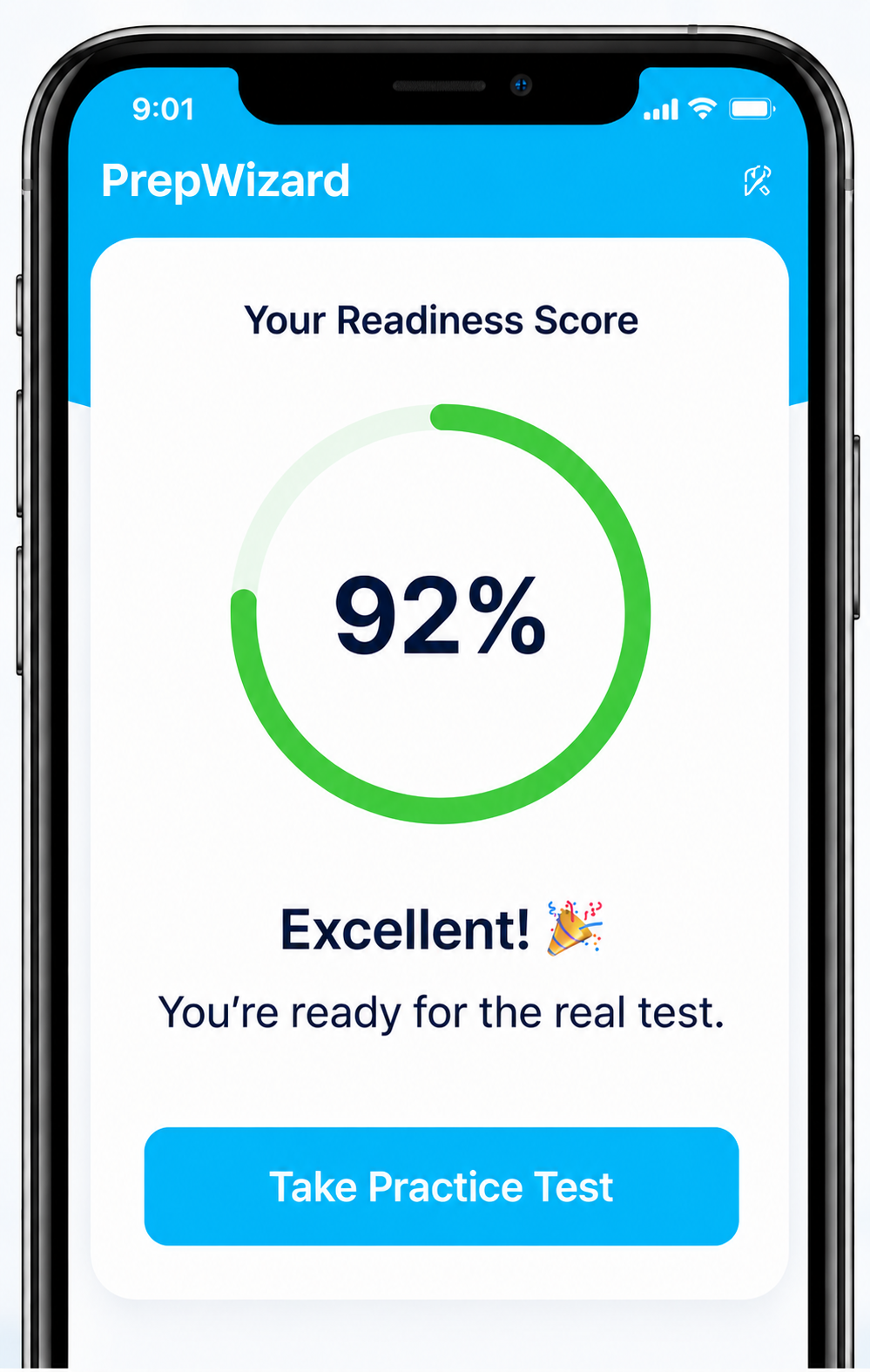 Sample readiness screen
Choose an answer to continue.
Questions about your course? Call 1-800-482-6593.
Choose your county or area to find local driver education information and links to its cities and communities.
Place names and county relationships: 2020 U.S. Census reference files. Includes county equivalents and census-designated communities.