
Enroll and start studying.
Build your understanding of traffic rules and safe driving with TeenDrivingCourse’s self-paced online lessons. Study from your computer, tablet, or smartphone before your test is scheduled on calendar

ONLINE TEEN DRIVER EDUCATION
FLEXIBLE ONLINE DRIVER EDUCATION
FOR NEW DRIVERS IN HAWAII.

Take the course on any device. Your progress is saved automatically.
Build your understanding of traffic rules and safe driving with TeenDrivingCourse’s self-paced online lessons. Study from your computer, tablet, or smartphone before your test is scheduled on calendar
Review the Hawaii Driver’s Manual and use PrepWizard’s timed practice and targeted quizzes to work on difficult topics. Hawaii’s written test has 30 questions, and you need at least 24 correct answers to pass.
Apply for your instruction permit starting at age 15½. After receiving it, complete at least 180 days of supervised driving eligibility and the required certified driver education before qualifying for a provisional license at age 16 or older. You must also pass the road test.
Choose the course that fits your Hawaii learning goals.
Compare approval, the total cost, and the help you’ll get along the way.
Review current Hawaii options and prices.
Ask what’s included before you enroll.
Take the next step toward confident driving in Hawaii.
Find your course and start building good habits.
Review your course details and price before you enroll.

Short study sessions that fit around school and family life.
Pick up where you left off, on your own schedule.
Review your course and completion details before you enroll.
Our team can help with course, account, and certificate questions.
Quick answers for Hawaii teens and parents.
Find more help on our full FAQ page.
You must be at least 15 years and 6 months old. You also need to complete the application requirements and pass the vision screening and knowledge test.
Apply through your county’s driver licensing office. Honolulu, Hawaii County, Maui, and Kauai handle their own licensing appointments and application procedures.
Not necessarily. Required signatures depend on custody or guardianship, and properly notarized consent may replace a parent’s attendance. Check your county’s instructions before your visit.
You need at least 24 correct answers out of 30, which is 80 percent. The test covers traffic laws, road signs, and safe driving practices.
Yes, Hawaii offers an official online option through its county licensing system. You must still complete an in-person visit before receiving your permit. TeenDrivingCourse and PrepWizard practice tests do not replace the official test.
Yes. You must complete a Hawaii state-certified program and obtain both the classroom and behind-the-wheel certificates.
No. TeenDrivingCourse is a supplementary study course, not a Hawaii state-certified program. It does not provide either of the required state-certified driver education certificates.
No. TeenDrivingCourse is self-paced, so you can study in shorter sessions and return later from a computer, tablet, or smartphone.
PrepWizard provides diagnostic score reports, targeted quizzes, and timed practice exams. Use these tools to identify difficult topics and practice before taking the official knowledge test.
You must hold it for at least 180 days before qualifying for a provisional license. The permit is normally valid for one year, so check its expiration date.
A driver who is at least 21 and licensed for your vehicle must sit beside you. Between 11:00 p.m. and 5:00 a.m., that person must be your licensed parent or guardian. You cannot drive alone with a permit.
You may qualify for a provisional license at 16 after the permit period, certified education, and road test requirements. The earliest full-license age is 17 after six satisfactory months on a provisional license, although turning 18 removes that six-month holding requirement. Other eligibility requirements still apply, and you must apply through your county.
During daytime hours, you may carry no more than one passenger under 18 outside the household exception unless your licensed parent or guardian supervises you. From 11:00 p.m. to 5:00 a.m., you need that supervision or a qualifying work or school trip with the required signed statement. Without parental or guardian supervision during those late-night trips, the limit is one passenger under 18 regardless of household membership.
No, except for the sole purpose of contacting 911 in an emergency. The restriction continues until age 18, even if you already have a full driver’s license.
For policies issued or renewed with effective dates on or after January 1, 2026, liability minimums are $40,000 per person and $80,000 per accident for bodily injury, plus $20,000 for property damage. Hawaii also requires at least $10,000 in PIP coverage per person.
Licensing information: Hawaii Department of Transportation →
Find your next step, or get help from our team.
Hawaii’s graduated licensing program gives drivers under 18 three stages to complete: an instruction permit, a provisional license, and a full driver’s license. The earliest starting ages are 15½, 16, and 17, respectively. Reaching the required age does not replace the training, testing, and waiting-period requirements for each stage.
Driver licensing takes place through the City and County of Honolulu and the counties of Hawaii, Maui, and Kauai. Your county handles permit applications, licensing appointments, and road tests. Check its current document checklist and appointment procedures before visiting.
TeenDrivingCourse is a supplementary study course, not a Hawaii state-certified driver education program. It does not provide the state-certified classroom or behind-the-wheel certificates required for a provisional license. It does not satisfy Hawaii’s mandatory driver education, supervised practice, or testing requirements. Use it for additional preparation alongside the official licensing process.
Once you are 15 years and 6 months old, you are old enough to apply for an instruction permit. Gather the identity and residency documents your county requires, along with any requested legal-presence and Social Security verification. Minors generally need parental or guardian consent. The required signatures depend on custody or guardianship, and properly notarized consent may allow a parent to sign without attending the appointment.
You must pass a vision screening and the written knowledge test. The knowledge test covers traffic laws, road signs, and safe driving practices. It contains 30 questions, with a passing score of at least 80 percent, or 24 correct answers.
Hawaii also offers an official online knowledge-test option through its county licensing system. Passing online does not issue your permit automatically. You must still complete the required in-person visit, including document verification and a vision screening. This official test is separate from TeenDrivingCourse and PrepWizard practice tests.
Before receiving a provisional license, you must complete Hawaii’s required state-certified driver education. It includes classroom instruction and behind-the-wheel training, with a separate certificate for each component. You will need both certificates for the licensing process.
Look for a certified program through a participating high school or a provider listed by the Hawaii Department of Transportation. Ask about upcoming classes and enrollment procedures early. Public-school programs use waitlists, so planning ahead helps you coordinate your instruction with your permit period.
TeenDrivingCourse does not replace either part of this certified program. Its online lessons provide supplementary study, not professional behind-the-wheel instruction or the required state certificates.
You must hold your instruction permit for at least 180 days before qualifying for a provisional license. A permit is normally valid for one year, so check its expiration date as you plan your training and road test.
An instruction permit never allows you to drive alone. A driver who is at least 21 and licensed for the vehicle you are driving must sit beside you. Between 11:00 p.m. and 5:00 a.m., your supervising driver must be your licensed parent or guardian.
Use your practice time to work on right-of-way decisions, hazard recognition, and defensive driving habits. With your supervising adult, gradually practice on town streets, two-lane roads, in rain, and after dark when conditions are appropriate for your skill level.
At age 16 or older, you may qualify for a provisional license after holding your permit for at least 180 days, completing certified driver education, and passing the road test. You must have the required classroom and behind-the-wheel certificates. Pending proceedings that could suspend or revoke your permit can prevent issuance.
A provisional license allows you to drive without supervision only within its passenger and nighttime restrictions. The earliest age for a full license is 17, after satisfactorily holding the provisional license for at least six months and meeting the remaining requirements. You must apply for the conversion through your county.
If you turn 18 before completing those six months, state law allows you to apply without finishing the six-month holding period, provided you satisfy the other licensing conditions.
During daytime hours, you may carry no more than one passenger under 18 outside the household exception unless your licensed parent or guardian accompanies and supervises you. The exception covers household members and a household member’s foster or hanai children.
Between 11:00 p.m. and 5:00 a.m., your licensed parent or guardian must sit beside you unless you qualify for a necessary trip to or from work or a school-authorized activity. For a work trip, carry the required signed employer statement. For a school-authorized activity, carry the required signed statement from your parent or guardian.
A stricter passenger rule applies during these late-night trips: without your licensed parent or guardian supervising, you may carry no more than one passenger under 18, even when the passengers are household members.
Drivers under 18 must not use mobile electronic devices while driving, including hands-free devices, except for the sole purpose of contacting 911 in an emergency. This restriction still applies if you earn a full license at 17. Put your phone away before starting your trip and leave it alone until you are safely stopped outside traffic with the engine off.
Hawaii requires liability insurance and Personal Injury Protection, or PIP. Its no-fault PIP coverage pays eligible medical and rehabilitation expenses regardless of who caused the crash.
For new or renewed policies with effective dates on or after January 1, 2026, minimum liability coverage is $40,000 for bodily injury per person, $80,000 for bodily injury per accident, and $20,000 for property damage per accident. Required PIP coverage remains at least $10,000 per person. Review your family’s policy with the insurer before you begin driving.
Start with the Hawaii Driver’s Manual. Use its explanations of traffic laws, signs, and safe driving practices to guide your study. Include right-of-way rules, recognizing hazards, and choosing safe responses to changing road conditions.
PrepWizard offers additional practice through diagnostic score reports, short quizzes focused on weaker topics, and timed practice exams. Review your results, return to topics you missed, and practice answering questions under timed conditions. The Hawaii written test has 30 questions drawn from the driver’s manual, and you need 24 correct answers to pass.
TeenDrivingCourse provides online lessons covering road rules, driving conditions, and responses to emergencies. Its self-paced format lets you study in shorter sessions and return when your schedule allows. You can access the course from a computer, tablet, or smartphone.Our course covers defensive driving techniques, hazard recognition, right-of-way rules, and essential safe-driving habits, all through a flexible, self-paced online format. You can begin learning before your permit test is even scheduled. Families use it to arrive at the licensing center feeling prepared, stay productive while waiting for a spot in a certified course, and reinforce their skills throughout the 180 supervised permit days.
Use the lessons before your permit test or as additional study while completing your certified instruction and supervised practice. Keep the distinction clear: TeenDrivingCourse supports your learning, while a Hawaii-certified program supplies the required driver education certificates. Your county administers the licensing process.
Build confidence one question at a time. Try a few practice questions, then keep preparing for your Hawaii knowledge test.
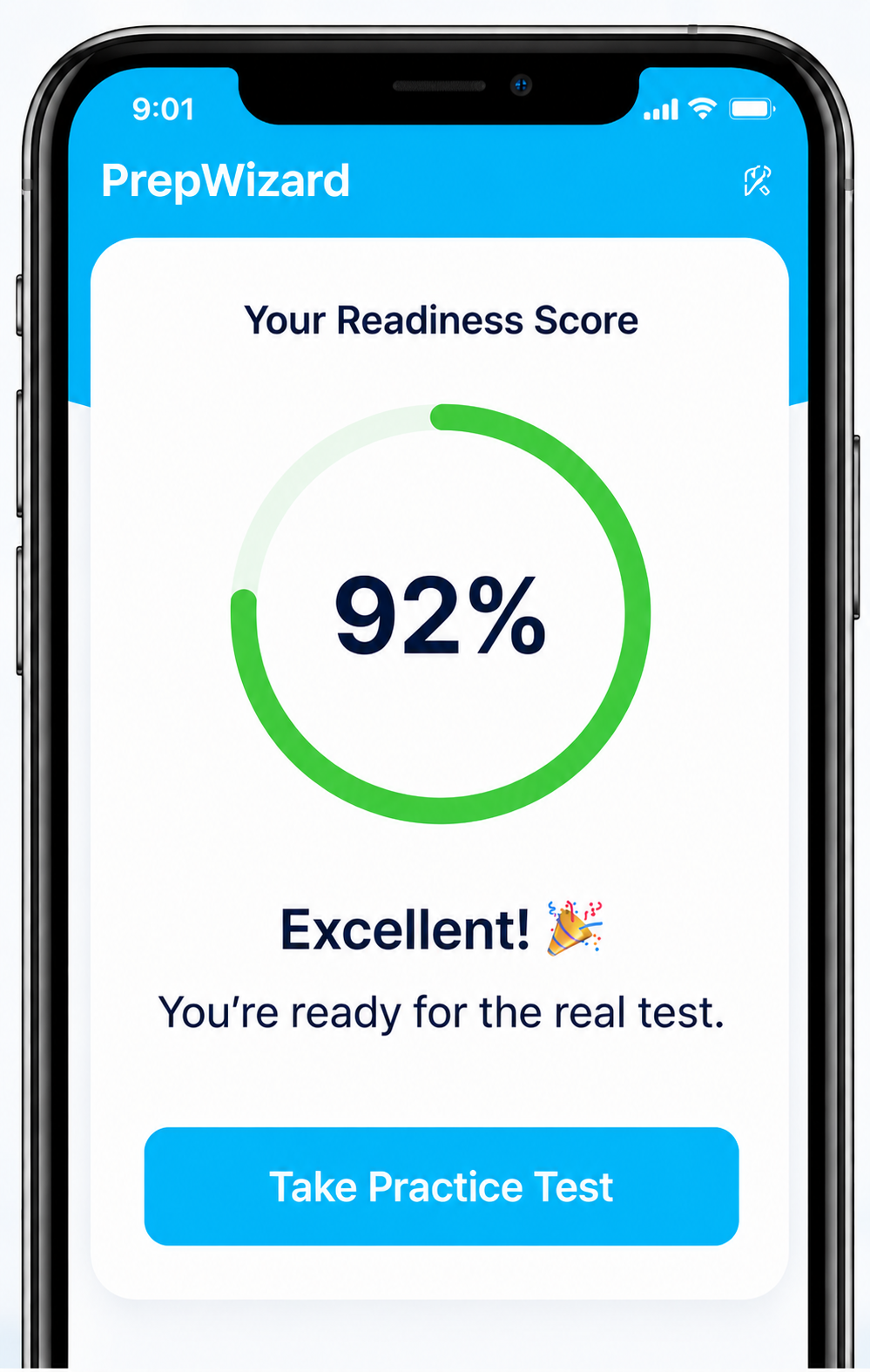 Sample readiness screen
Choose an answer to continue.
Questions about your course? Call 1-800-482-6593.
Choose your county or area to find local driver education information and links to its cities and communities.
Place names and county relationships: 2020 U.S. Census reference files. Includes county equivalents and census-designated communities.