
Start learning the basics.
Work through the self-paced online course on your preferred device to review traffic rules, hazard awareness, and defensive driving concepts before beginning Minnesota’s required in-person driver education.

ONLINE TEEN DRIVER EDUCATION
FLEXIBLE ONLINE DRIVER EDUCATION
FOR NEW DRIVERS IN MINNESOTA.
Take the course on any device. Your progress is saved automatically.
Work through the self-paced online course on your preferred device to review traffic rules, hazard awareness, and defensive driving concepts before beginning Minnesota’s required in-person driver education.
Use the included 3-day PrepWizard trial to work through Minnesota-specific practice questions, timed test simulations, and Focus Mode exercises that concentrate on topics you miss most often.
Take the Minnesota knowledge and vision tests when you are eligible for your instruction permit at 15. After that, complete your required supervised driving hours and continue building the skills needed for your provisional license.
Choose the course that fits your Minnesota learning goals.
Compare approval, the total cost, and the help you’ll get along the way.
Review current Minnesota options and prices.
Ask what’s included before you enroll.
Take the next step toward confident driving in Minnesota.
Find your course and start building good habits.
Review your course details and price before you enroll.

Short study sessions that fit around school and family life.
Pick up where you left off, on your own schedule.
Review your course and completion details before you enroll.
Our team can help with course, account, and certificate questions.
Quick answers for Minnesota teens and parents.
Find more help on our full FAQ page.
You can apply for an instruction permit at 15, after meeting Minnesota’s education, testing, identification, and application requirements.
For drivers under 18 following the standard teen licensing pathway, Minnesota requires the applicable classroom and behind-the-wheel driver education requirements. The classroom portion is generally completed in person, with a specific homeschool exception for qualifying students.
No. TeenDrivingCourse is not a Minnesota DVS-approved provider and does not replace the required classroom or behind-the-wheel instruction.
Minnesota requires 30 hours of classroom driver education for the applicable teen licensing pathway.
You generally need 50 supervised hours, including 15 nighttime hours. The total can be reduced to 40 hours if a qualifying parent or guardian completes the required parent class.
Yes. Completing the qualifying parent education class can reduce the total supervised-driving requirement from 50 to 40 hours, but you still need 15 nighttime hours.
You must be at least 15 to take the knowledge test for the instruction permit.
If you are under 18, you must practice with a supervising driver who is at least 21 years old.
If you are under 18, you generally need to hold your instruction permit for at least six months before taking the road test, while meeting the other eligibility requirements.
You can move to the provisional stage at 16 after meeting the permit, driver education, supervised-driving, and road-test requirements.
Generally, no. During your first six months, provisional drivers cannot drive between midnight and 5 a.m., subject to Minnesota’s listed exceptions.
During the first six months, you are generally limited to one passenger under 20 who is not immediate family. During the second six months, the limit increases to three, with Minnesota’s stated exceptions.
No. Minnesota prohibits drivers under 18 with an instruction permit or provisional license from using or talking on a cell phone while driving, including hands-free use.
The included 3-day PrepWizard trial provides practice questions, timed exams, and Focus Mode so you can concentrate on topics you need to review before taking the knowledge test.
Yes, as an additional study resource. It can help reinforce driving knowledge and defensive-driving concepts, but it does not replace Minnesota-approved classroom or behind-the-wheel instruction.
Licensing information: Minnesota Driver and Vehicle Services →
Find your next step, or get help from our team.
Minnesota uses a Graduated Driver Licensing (GDL) system to help young drivers gain experience in stages. You can apply for an instruction permit at 15, and drivers under 18 generally need to complete the required driver education, supervised practice, and testing before moving on to a provisional license.
Minnesota requires 30 hours of classroom driver education and behind-the-wheel instruction through the state’s driver education system. Classroom instruction must be conducted in person by an instructor who is physically present with students. A specific exception allows qualifying full-time homeschool students to complete the classroom portion at home using DVS-approved materials and following the state’s homeschool process.
TeenDrivingCourse is not a Minnesota DVS-approved driver education provider. Its online course does not replace Minnesota’s required classroom or behind-the-wheel instruction and does not count toward the state’s driver education completion requirements.
Instead, the course can be used as an additional study resource. It gives you an opportunity to review driving concepts, prepare for the knowledge test, and build a foundation before and during the supervised-driving stage.
Here is the basic path:
Minnesota’s teen driver education process begins with classroom instruction. For students using the traditional driver education route, the classroom portion requires 30 hours of instruction, followed by or alongside the required behind-the-wheel training.
If you are a qualifying full-time homeschooled student, Minnesota provides a separate process for completing the classroom portion with DVS-approved materials. Students attending online school, e-learning, charter school, or who are homebound do not qualify for this particular homeschool exception.
Once you are eligible at 15, you must pass a vision screening and written knowledge test and complete the permit application requirements. Minnesota’s knowledge test is based on the state Driver’s Manual.
For drivers under 18, practice driving must be supervised by a licensed driver who is at least 21 years old. Seat belts are required, and Minnesota prohibits drivers under 18 from using or talking on a cell phone while driving, including with a hands-free device.
TeenDrivingCourse does not substitute for Minnesota’s required in-person driver education. Instead, it can give you a way to study traffic rules, defensive driving concepts, hazard recognition, and other driving fundamentals before you take the knowledge test or begin accumulating supervised driving experience.
After receiving your instruction permit, supervised practice becomes an important part of the licensing process.
For a provisional license, Minnesota requires a supervised driving log. You generally need 50 hours of supervised driving, including at least 15 nighttime hours. If your parent or guardian completes the qualifying parent education class, the required total can be reduced to 40 hours, while the 15-night-hour requirement remains.
Your supervised practice should give you experience with different roads, traffic situations, weather conditions, and driving decisions. The goal is not simply to complete the required hours, but to become more comfortable and responsible behind the wheel.
TeenDrivingCourse can serve as a supplemental learning resource during this stage, helping reinforce defensive-driving concepts and safe-driving habits while you gain real-world experience with your supervising driver.
You must be at least 16 and have held your instruction permit for the required period before taking the road test. For drivers under 18, Minnesota requires the permit to have been held for at least six months, with no convictions for moving violations or alcohol- or controlled-substance-related violations. You must also have completed driver education and meet the supervised-driving requirements.
Before taking the road test, you will need to provide the required documentation, including your supervised driving log. Minnesota’s DVS materials state that the driving log is presented at the road test and submitted as part of the provisional-license process.
After passing the road test and meeting the remaining requirements, you can apply for your provisional license. The provisional license comes with additional restrictions designed for newer drivers.
Your first months with a provisional license come with rules concerning nighttime driving and passengers.
During the first six months, provisional drivers generally cannot drive between midnight and 5 a.m. Exceptions include certain situations involving work, school activities, employment, or being accompanied by a licensed driver who is at least 25.
During the first six months, you may generally have one passenger under 20 who is not an immediate family member, unless accompanied by a parent or guardian. During the second six months, the limit increases to three passengers under 20, again with an exception for immediate family members.
Minnesota does not allow drivers under 18 with an instruction permit or provisional license to use or talk on a cell phone while driving, including hands-free use.
The safest approach is simple: keep your phone out of reach and wait until you are parked before using it.
Minnesota gives parents and guardians an option that can reduce the total supervised-driving requirement.
If a parent or guardian completes the qualifying parent education class provided through an approved driver education program, the supervised-driving requirement can be reduced from 50 hours to 40 hours. The driving log must still include 15 nighttime hours.
The parent class is therefore not a replacement for supervised practice. It changes the number of total hours you must document.
Minnesota requires vehicle owners to maintain no-fault automobile insurance, and operating an uninsured vehicle on public roads is against state law. Drivers should have proof of insurance available when required.
Before a new teen driver begins driving a family vehicle, review the family’s insurance policy and make sure the vehicle and driver are properly covered.
Minnesota’s written knowledge test covers information found in the Minnesota Driver’s Manual, including traffic laws, safe-driving practices, and road rules.
Reading the manual is important, but practicing questions can help you become more comfortable applying what you have studied.
Each TeenDrivingCourse purchase includes a 3-day PrepWizard trial. During the trial, you can:
Use the practice period to identify weak areas before you visit the exam station. The goal is to arrive prepared rather than seeing the question format for the first time during the actual test.
The important distinction is this: TeenDrivingCourse is an online supplemental course, not a Minnesota-approved driver education program.
Minnesota generally requires teen driver education through approved in-person instruction, with a specific homeschool pathway for qualifying full-time homeschool students using DVS-approved materials. TeenDrivingCourse is not part of either approved pathway.
That means the course does not replace the required classroom hours, behind-the-wheel instruction, or other DVS licensing requirements.
What it can provide is additional preparation. You can use the self-paced course to review defensive driving, hazard recognition, right-of-way concepts, and safe-driving principles while preparing for the knowledge test and building experience during supervised practice.
Think of it as an extra study tool alongside Minnesota’s official licensing process—not a substitute for it.
Build confidence one question at a time. Try a few practice questions, then keep preparing for your Minnesota knowledge test.
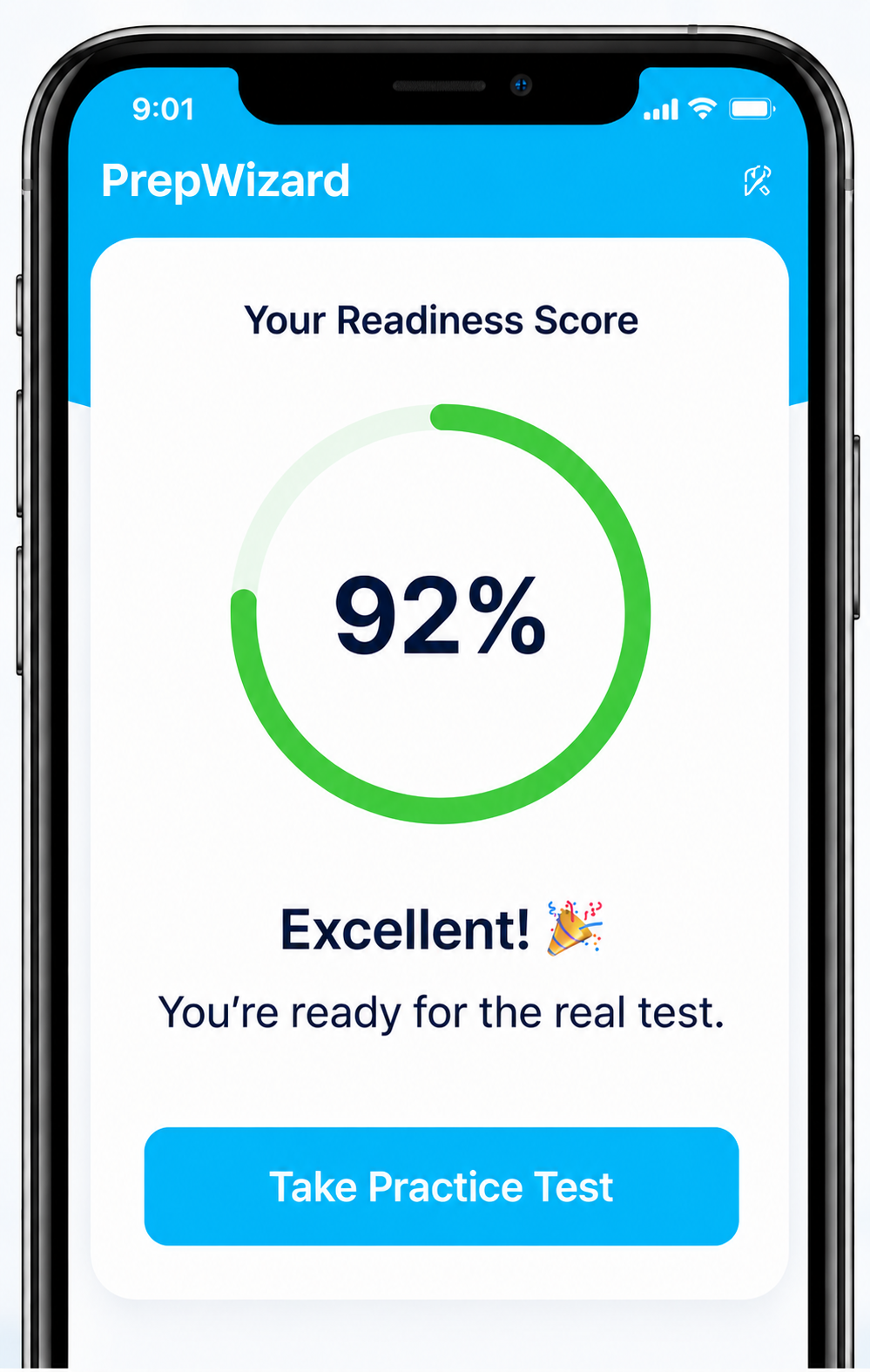 Sample readiness screen
Choose an answer to continue.
Questions about your course? Call 1-800-482-6593.
Choose your county or area to find local driver education information and links to its cities and communities.
Place names and county relationships: 2020 U.S. Census reference files. Includes county equivalents and census-designated communities.