
Start learning the rules of the road.
Enroll in the self-paced online course and study from your phone, tablet, or computer. Review traffic rules, hazard recognition, and defensive driving before your driving lessons or permit test.

ONLINE TEEN DRIVER EDUCATION
FLEXIBLE ONLINE DRIVER EDUCATION
FOR NEW DRIVERS IN NEW JERSEY.

Take the course on any device. Your progress is saved automatically.
Enroll in the self-paced online course and study from your phone, tablet, or computer. Review traffic rules, hazard recognition, and defensive driving before your driving lessons or permit test.
Use your included 3-day trial to answer New Jersey practice questions, take timed exams, and review difficult topics with Focus Mode. Prepare for the MVC’s 50-question knowledge test, which requires an 80% passing score.
Complete the MVC requirements for your permit, then begin supervised driving. Teen applicants need at least six months of practice before qualifying for a probationary license at age 17 or older.
Choose the course that fits your New Jersey learning goals.
Compare approval, the total cost, and the help you’ll get along the way.
Review current New Jersey options and prices.
Ask what’s included before you enroll.
Take the next step toward confident driving in New Jersey.
Find your course and start building good habits.
Review your course details and price before you enroll.

Short study sessions that fit around school and family life.
Pick up where you left off, on your own schedule.
Review your course and completion details before you enroll.
Our team can help with course, account, and certificate questions.
Quick answers for New Jersey teens and parents.
Find more help on our full FAQ page.
No. It is an optional study course, not a New Jersey licensed driving school or approved program. It does not fulfill required MVC licensing steps.
You will review traffic rules, defensive driving, hazard recognition, right-of-way, and safe driving habits. Study at your own pace from a computer, tablet, or smartphone.
The 3-day trial includes New Jersey-specific practice questions, timed exams, and Focus Mode for difficult topics. You can review your results as you prepare.
You can start at 16 through the Early Bird program and its approved instruction requirements. At 17, you can apply for an examination permit without mandatory driving school enrollment.
Yes, if you start through the Early Bird road at 16. Complete six hours with a licensed instructor in a dual-controlled vehicle before your permit is validated for supervised practice.
There are 50 questions. You must answer at least 40 correctly, an 80% score, to pass.
A valid blue test waiver card from an approved high school program lets you show you already passed. Teendrivingcourse does not issue or replace that waiver.
A supervising driver must sit in the front passenger seat, be at least 21, hold a valid New Jersey license, and have at least three years of driving experience. You cannot drive alone.
Young permit holders subject to the current requirements need at least six months and 50 supervised hours, including 10 during darkness. A parent, guardian, or supervising driver must certify the hours on MVC form BA-CSD.
The earliest probationary license age is 17, after completing the permit requirements and passing the road test. A basic license is available at 18 at the earliest, after at least one probationary year and the required upgrade.
Yes, if you are under 21 with a permit or probationary license. Place one on the upper-left corner of each license plate, including for your road test.
If you are under 21, generally only one additional passenger is allowed beyond your dependents and any required permit supervisor. A parent or guardian’s presence removes that passenger limit.
If you are under 21, you generally cannot drive between 11:01 p.m. and 5:00 a.m. Qualifying employment and religious activities have documented exceptions.
Not for ordinary calls while you hold a GDL permit or probationary license. The restriction covers both handheld and hands-free phone use.
Minimum liability limits are $35,000 per person and $70,000 per accident for bodily injury, plus $25,000 for property damage. PIP options start at $15,000, and Basic Policies have different limits.
Licensing information: New Jersey Motor Vehicle Commission →
Find your next step, or get help from our team.
New Jersey’s Graduated Driver License program, or GDL, has three starting paths. The Early Bird road begins at 16, the Young Adult road applies to ages 17 through 20, and the Adult road starts at 21. Each includes a permit, supervised driving, a road test, and a probationary license before the basic license. The Motor Vehicle Commission, or MVC, administers the process.
The practice period depends on your age. Drivers under 21 need at least six months of supervised driving. Those entering the Adult road at 21 or older need at least three months.
Before enrolling, understand where this online course fits. Teendrivingcourse is not a New Jersey licensed driving school or an MVC-approved driver education program. Our course cannot issue or validate your permit, provide the required six hours of professional driving instruction, replace an approved high school test waiver, or satisfy any required MVC licensing step. It is an optional study resource for knowledge-test preparation and safe driving education.
For the Early Bird road, you must complete approved behind-the-wheel instruction through a licensed driving school or an eligible high school program. Teendrivingcourse does not provide that instruction.
These are the main licensing milestones:
Starting at 16
The Early Bird road requires enrollment in an approved behind-the-wheel program. When you use a licensed New Jersey driving school, an authorized instructor or school representative arranges your special learner’s permit. You must provide the required identification, obtain parental or guardian consent, and meet the vision and knowledge-test requirements.
The MVC knowledge test contains 50 questions about information in the New Jersey Driver Manual. You need 40 correct answers, or 80%, to pass. Students who already passed the test through an approved high school program can present their valid blue test waiver card instead of repeating it.
Complete six hours of behind-the-wheel instruction with a licensed instructor in a dual-controlled vehicle. Your permit must then be validated before you begin supervised practice outside those lessons. Your driving school guides you through these steps, including the required MVC visit.
Starting at 17 through 20
The Young Adult road lets you apply for an examination permit without enrolling in driving school. Apply through an MVC licensing center, provide the required documents, obtain parental consent if you are under 18, and meet the vision and knowledge-test requirements.
Teendrivingcourse remains supplementary on either path. Taking our online course does not replace the permit application, required professional instruction, or an approved high school waiver. Its role is to help you study before those steps.
For drivers under 21, the supervised period lasts at least six months. Your supervising driver must sit beside you in the front seat, be at least 21, hold a valid New Jersey driver’s license, and have at least three years of driving experience. A permit never allows you to drive alone.
Young permit holders subject to the current practice requirement must complete at least 50 supervised hours, including 10 during darkness. A parent, guardian, or supervising driver must certify completion using MVC form BA-CSD. Keep a practice log and bring the completed certification to your road-test appointment.
Use your practice time to develop experience in different conditions. Include highways, jughandles, intersections, wet roads, and nighttime driving as your skills improve. Follow the GDL restrictions and display the required red decals throughout your supervised driving.
Once you are at least 17, have completed the required supervised period, and have met the practice requirements, you are eligible for the MVC road test. Passing lets you obtain a probationary license and drive without supervision while following the applicable GDL restrictions.
The probationary stage lasts at least one year. Continue following the passenger, nighttime, phone, and decal rules that apply to your age and license status.
After at least one year of probationary driving, and once you are at least 18, complete the upgrade to a basic license. The upgrade is not automatic. The MVC offers an online upgrade for eligible drivers.
Once you hold the basic license, the GDL-specific restrictions and decal requirement no longer apply. Turning 18 alone does not end them while you still hold a probationary license.
For drivers under 21, the main GDL restrictions include:
GDL violations carry a $100 fine. The nighttime and passenger restrictions have age-based exemptions at 21, and the decal rule applies to drivers under 21. Phone and seat-belt requirements continue during the permit and probationary stages.
Kyleigh’s Law requires permit and probationary drivers under 21 to display red reflectorized decals on the upper-left corner of both the front and rear license plates. They identify drivers subject to GDL restrictions.
Decals cost $4 per pair at MVC agencies and are removable for use on different vehicles. Make sure they are displayed whenever you drive, including during your road test. Failing to display them carries a $100 fine.
New Jersey generally prohibits handheld phone use for all drivers, with increasing penalties for repeat violations. Permit and probationary drivers face stricter rules that also prohibit hands-free use. Keep your phone out of reach and wait until you are safely parked to make ordinary calls or send messages.
New Jersey requires auto insurance, but coverage requirements differ between Standard and Basic policies. For a Standard Policy, current minimum bodily injury and property damage liability limits are:
Personal Injury Protection, or PIP, coverage options start at $15,000, with higher required benefits for certain serious injuries. A Basic Policy has different coverage limits and should not be confused with a Standard Policy.
PIP helps cover eligible injuries without depending on who caused the crash. Before a teen starts driving, review the family’s policy and available coverage with the insurer.
The MVC knowledge test covers traffic laws, road signs, and safe driving information from the New Jersey Driver Manual. You must answer at least 40 of its 50 questions correctly. Read the manual, then use practice questions to check your understanding.
Your course includes a 3-day PrepWizard trial with New Jersey-specific practice questions, timed exams, and Focus Mode for reviewing topics you find difficult. Track your results and study from your computer, tablet, or smartphone.
Use the trial when you have time to review consistently before your MVC appointment. Practice exams help you identify material to revisit, but they do not replace the official knowledge test.
Teendrivingcourse offers optional online study for students preparing for New Jersey’s licensing process. The course covers defensive driving, hazard recognition, right-of-way rules, and safe driving habits. Work through the material at your own pace before professional lessons or alongside your supervised practice.
Our course does not fulfill New Jersey licensing requirements. Teendrivingcourse is not a New Jersey licensed driving school or an approved driver education program. It cannot arrange or validate your permit, provide the Early Bird road’s six professional driving hours, replace the high school blue waiver, or count toward another required MVC step.
Its purpose is preparation: helping you understand the material before your knowledge test and reinforcing safe driving concepts during the months you practice.
Build confidence one question at a time. Try a few practice questions, then keep preparing for your New Jersey knowledge test.
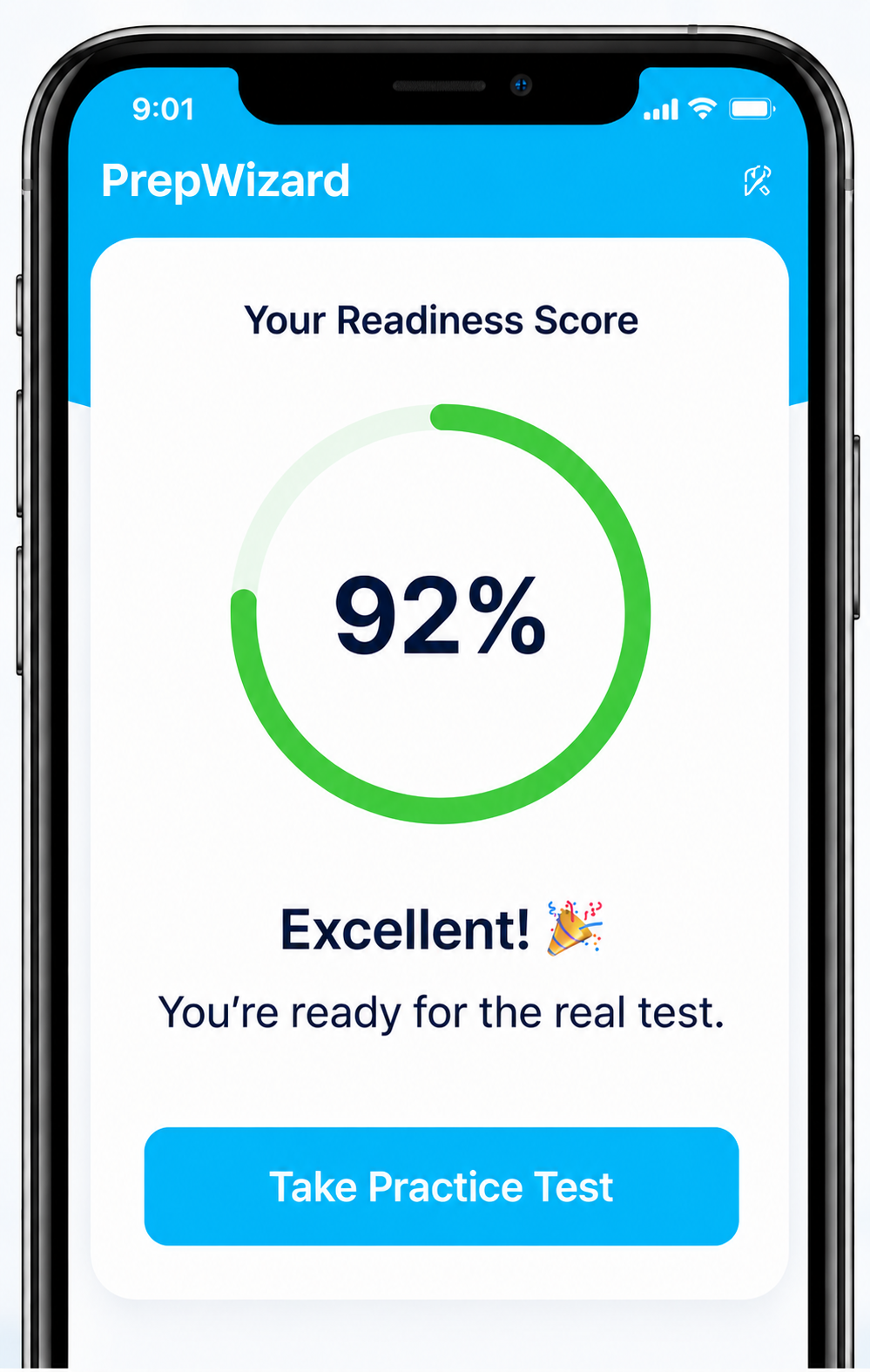 Sample readiness screen
Choose an answer to continue.
Questions about your course? Call 1-800-482-6593.
Choose your county or area to find local driver education information and links to its cities and communities.
Place names and county relationships: 2020 U.S. Census reference files. Includes county equivalents and census-designated communities.