New York Online Driver Education
New York Teen Driver Licensing: What You Need to Know
New York uses a graduated licensing system for teen drivers. You can apply for a learner permit at age 16. After holding the permit for at least six months and meeting the other requirements, you can take the road test and qualify for a junior license, Class DJ. A full senior Class D license can be available at 17 after completing an approved high school or college driver education program; otherwise, the junior restrictions continue until age 18.
There is an important distinction between studying online and completing New York’s required licensing courses. Before a road test, New York requires completion of an approved safe-driving course. A 5-hour Pre-Licensing Course can satisfy that requirement, while an approved high school or college driver education program also fulfills it. New York currently offers an online Pre-Licensing Course pilot for motorists age 18 and older. For teen drivers following the junior-license path, Teendrivingcourse.com is a supplementary educational resource rather than a New York DMV-approved pre-licensing or driver education program. It does not replace the required state-approved course or produce the MV-278 or MV-285 certificates.
Your basic path looks like this:
- Learner permit: available at age 16 after passing the written and vision tests, with parental consent generally required at ages 16 and 17.
- Junior license (Class DJ): available after the permit has been held in valid status for at least six months, the required supervised driving has been completed, the required course documentation is in place, and you pass the road test.
- Senior license (Class D): available at 17 with a qualifying state-approved driver education certificate; otherwise, full Class D eligibility is at 18.
How to Work Through the New York Licensing Process
1. Get Your Learner Permit at 16
At age 16, you can apply for a New York learner permit. You must pass the written test and a vision test, and applicants who are 16 or 17 generally need parental consent. The written test is based on the New York State Driver’s Manual.
New York also has a useful school-based option through its DMV OKTA program. Participating students can take the written test at school beginning before their 16th birthday, although the learner permit itself cannot be issued until the required age. The permit does not allow you to drive alone. You must follow the applicable regional restrictions and drive with a qualified supervising driver.
2. Complete the Required Safe-Driving Course
Before you can take the road test, you need proof that you completed an approved safe-driving course. This can come from a 5-hour Pre-Licensing Course or from an approved high school or college driver education program. At the road test, the required documentation is the original MV-278 Pre-Licensing Course Certificate or the applicable MV-285 Student Certificate of Completion.
For teen drivers, Teendrivingcourse.com does not replace that state requirement. Its online course is intended as a supplemental learning tool: it can help you study the rules, prepare for the written test, and develop defensive-driving knowledge before and during your supervised practice. It does not issue the New York DMV-required MV-278 or MV-285.
3. Complete Your Supervised Driving Practice
New York requires junior permit holders to complete at least 50 hours of supervised driving before the road test, including at least 15 hours after sunset. The DMV recommends that at least 10 of those supervised hours be practiced in moderate to heavy traffic. Your parent or guardian records and certifies the required practice on form MV-262, which you must provide to the examiner at the road test if you are under 18.
The goal is not simply to accumulate hours. You should use those hours to gain experience in different conditions, including nighttime driving and heavier traffic, while remaining within the rules for your learner permit.
4. Take the Road Test and Move to a Junior License
Your learner permit must be held in valid status for at least six months before you can take the road test. At the test, junior permit applicants must provide their photo learner permit, the required MV-278 or MV-285 documentation, and a completed MV-262. After passing, you receive a junior license, Class DJ or MJ, subject to New York’s graduated-license restrictions.
At age 17, completing a qualifying state-approved high school or college driver education course can allow you to move from a junior license to a senior Class D license. Without that approved driver education, junior-license restrictions continue until age 18.
New York Junior License Rules Depend on Where You Drive
New York divides junior-driver restrictions into three regions: New York City, Long Island, and upstate New York. The privileges attached to a junior license can therefore be very different depending on where you are driving.
New York City: A Class DJ or MJ junior license does not permit driving within the five boroughs. The prohibition applies regardless of whether you would otherwise be supervised. A 17-year-old who has completed an approved driver education program and obtained a Class D license is treated differently and may drive without those junior restrictions.
Long Island: In Nassau and Suffolk counties, junior-license driving is restricted and generally requires supervision except for certain permitted trips, such as qualifying employment, school, work-study, or approved driver education activities when the required documentation is carried.
Upstate New York: Junior license holders have broader daytime privileges. From 5 a.m. to 9 p.m., an eligible junior driver may generally drive without a supervising driver. Between 9 p.m. and 5 a.m., driving is limited to specified situations or requires qualified supervision.
Passenger restrictions also apply. A junior driver generally cannot carry more than one passenger under 21 who is not an immediate family member unless the supervising driver is an eligible parent, guardian, driver education teacher, or driving school instructor.
Keep Your Phone Out of Reach
New York prohibits handheld cell phone use and texting while driving. For drivers with junior or probationary licenses, a first conviction for a cell phone or texting violation results in a 120-day suspension. A subsequent conviction within the applicable six-month period can result in a revocation of at least one year.
For a new driver, the safest habit is straightforward: put the phone away before you start driving and leave it alone until the vehicle is parked.
Why the 48-Hour Driver Education Program Matters
For a 17-year-old, an approved high school or college driver education program can provide more than the required education component. Completing that program can make you eligible for a senior Class D license rather than remaining subject to junior-driver restrictions until age 18. The certificate associated with the program is form MV-285.
That distinction is especially important for teen drivers who live or regularly drive in areas where junior-license restrictions are more limiting.
Understand New York's Insurance Requirements
New York requires registered vehicles to maintain liability insurance. The state's minimum liability coverage includes $25,000 for injury to one person and $50,000 for injury to two or more people in an accident, along with $10,000 for property damage; higher limits apply when death is involved. New York also requires personal injury protection and uninsured motorist coverage.
Before you begin driving as a new teen driver, make sure the vehicle and family insurance policy meet New York's requirements.
Prepare for the New York Written Test with PrepWizard
The New York written test is based on the state's Driver’s Manual and covers traffic laws, safe-driving practices, and road signs. Road-sign questions are scored as a separate category, so studying signs deserves specific attention.
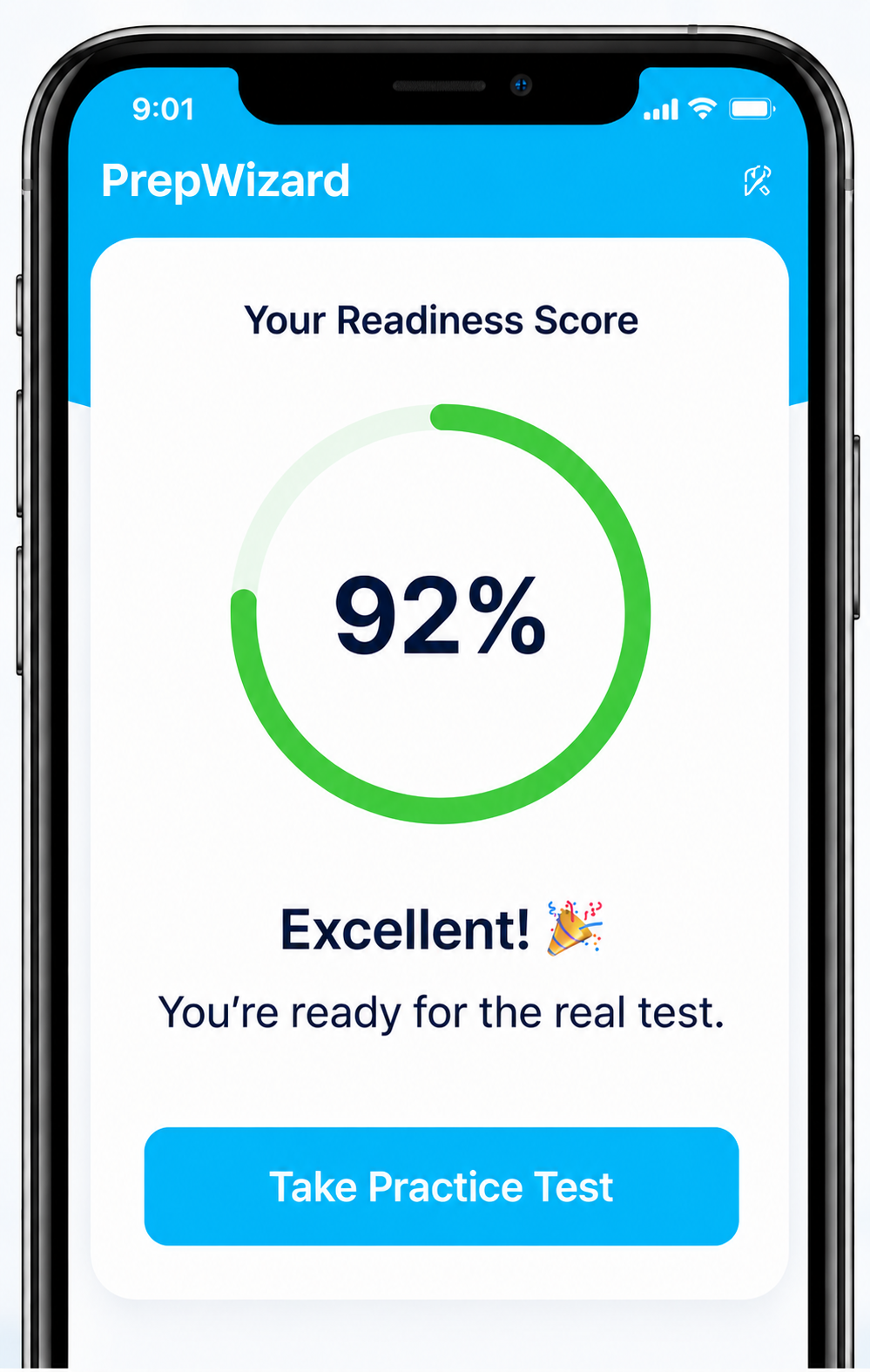
Each Teendrivingcourse.com purchase on this page includes a 3-day PrepWizard trial. You can use it to make your study sessions more focused and to become familiar with the experience of answering test-style questions.
With PrepWizard, you can:
- Practice questions covering New York traffic laws, safe driving, and road signs
- Complete timed practice exams
- Use Focus Mode to concentrate on topics you repeatedly miss
- Monitor your progress as you practice
- Study from a computer, tablet, or smartphone
Scheduling the trial close to your permit test can give you a concentrated period of practice immediately before your DMV visit or qualifying school-based testing session.
What Teendrivingcourse.com Does — and Does Not Do
Teendrivingcourse.com should be viewed as a supplemental learning resource for New York teens, not as a substitute for the state's approved licensing courses. It does not fulfill New York's safe-driving course requirement, replace the 5-hour Pre-Licensing Course or the approved 48-hour Driver Education program, or provide the MV-278 or MV-285 required for the licensing process.
What it can provide is structured online preparation. The course covers defensive driving techniques, hazard recognition, right-of-way rules, and safe-driving habits in a self-paced format. It can be started before your permit test and used as a study companion while you work through New York's supervised-driving requirements.
The key distinction is simple: New York's approved courses satisfy the state requirement; Teendrivingcourse.com helps you build knowledge and prepare for the steps around it.




 Sample readiness screen