North Carolina Online Driver Education
Getting Your North Carolina Driver's License: The Basics
North Carolina uses a graduated licensing system for drivers under 18. The process begins with a Level 1 Limited Learner Permit at age 15, followed by a Level 2 Limited Provisional License and then a Level 3 Full Provisional License. The North Carolina Division of Motor Vehicles (NCDMV) requires driver education before a teen can receive the Level 1 permit.
North Carolina's required driver education is separate from an optional online study course. Teens can enroll in an approved driver education program beginning at age 14½. The program includes a classroom portion and behind-the-wheel instruction, and completion provides the Driver's Education Certificate needed for the permit application. Teendrivingcourse.com is not a substitute for that approved North Carolina program and does not fulfill the state's driver education requirement.
The basic progression is:
- Level 1 Limited Learner Permit: age 15 or older after completing approved driver education, meeting the eligibility requirements, and passing the required tests.
- Level 2 Limited Provisional License: available at ages 16–17 after holding Level 1 for at least nine months, completing at least 60 hours of logged driving, maintaining the required clean record, and passing a road test.
- Level 3 Full Provisional License: available after holding Level 2 for at least six months and meeting the applicable clean-record and eligibility requirements.
How North Carolina's Graduated Licensing Process Works
Step 1: Complete Driver Education First
You can begin an approved North Carolina driver education program at 14½. It must be provided through an eligible high school program or a driver education school licensed by NCDMV. The program includes classroom instruction and a driving phase with behind-the-wheel training.
Once you complete the program, you receive the Driver's Education Certificate used during the Level 1 permit process. If your local school program is unavailable or full, NCDMV directs students to licensed commercial driver education schools as another option.
Teendrivingcourse.com does not replace this state-approved instruction. Instead, its role is to give you additional preparation before you take the DMV tests and begin supervised driving.
Step 2: Apply for Your Level 1 Limited Learner Permit at 15
At age 15, you may apply for the Level 1 permit after meeting the driver education and eligibility requirements. The permit process includes a written knowledge test, a separate road-sign test, and a vision test, with a parent or guardian present.
Once you have the permit, you must always drive with a qualified supervising driver beside you in the front seat. During the first six months, Level 1 driving is limited to 5 a.m. through 9 p.m.; after six months, you may drive at any time as long as you remain supervised. Mobile-device use is prohibited while operating the vehicle.
Your supervising driver must meet North Carolina's requirements. This can include a parent, legal guardian, grandparent, or an adult approved by a parent or guardian who has held a driver's license for at least five years.
Step 3: Complete the Required Supervised Driving
Before advancing to Level 2, you must hold the Level 1 permit for at least nine months, complete and log at least 60 hours of supervised driving, and record at least 10 of those hours at night. The driving log must be completed according to NCDMV requirements.
You also need the required clean driving record before moving to Level 2. NCDMV currently specifies no convictions for moving violations or seat belt/mobile-phone infractions during the preceding six months. Once these requirements are met, you can take the road test.
Step 4: Move to Level 2 and Then Level 3
At age 16 or 17, you can qualify for the Level 2 Limited Provisional License after holding the Level 1 permit for at least nine months, completing the required 60 driving hours, maintaining the required record, and passing the road test. NCDMV permits the road test through a certified driver education school or a driver license office.
A Level 2 driver may drive without supervision from 5 a.m. to 9 p.m. and for qualifying travel to or from work or certain emergency-service activities. After 9 p.m. and before 5 a.m., a supervising driver is required. Passenger restrictions also apply, and mobile-device use is prohibited.
After holding Level 2 for at least six months and meeting the clean-record requirements, you can upgrade to a Level 3 Full Provisional License. Current North Carolina law no longer requires the former additional 12-hour Level 3 driving log for this upgrade.
North Carolina Teen Driving Rules You Need to Know
Level 2 Driving Restrictions
A Level 2 license gives you more independence, but important limits remain. You can generally drive unsupervised between 5 a.m. and 9 p.m. and can make qualifying trips to or from work outside those hours. After 9 p.m., supervision is required.
When driving unsupervised, passenger restrictions apply. Generally, one passenger under 21 who is not a member of your household may ride with you. A second qualifying under-21 passenger may be permitted when that passenger is a student being taken directly to or from school. Household members under 21 are treated differently under the current rules.
Phones and Mobile Devices Are Prohibited
North Carolina prohibits drivers under the graduated licensing system from using mobile phones or other mobile-device technology while operating a vehicle. The restriction continues under the Full Provisional License for drivers who are still under 18, subject to the statutory emergency exceptions.
For a new driver, the safest approach is simple: keep the phone out of use while the vehicle is being operated.
Your Supervising Driver Must Qualify
A supervising driver must be a parent, legal guardian, grandparent, or another adult approved by a parent or guardian. The supervising driver must hold a valid driver's license and have been licensed for at least five years. The supervising driver must sit beside you while supervising.
School Eligibility Still Matters
North Carolina's teen licensing process uses a Driving Eligibility Certificate or qualifying educational credential as part of the graduated licensing system. Current law also changed some Level 3 eligibility rules in 2025, so students should confirm their school-status requirements with NCDMV when applying.
North Carolina Insurance Requirements
North Carolina requires continuous liability insurance on vehicles with valid North Carolina registration. Current minimum liability limits for policies issued or renewed after July 1, 2025 are $50,000 for bodily injury to one person, $100,000 for bodily injury to two or more people, and $50,000 for property damage. The state also requires uninsured/underinsured motorist coverage.
When you move into the road-test and licensing stages, make sure the teen driver's insurance documentation meets NCDMV requirements.
Prepare for the North Carolina Written and Signs Tests with PrepWizard
North Carolina requires a written knowledge test and a separate road-sign test as part of the Level 1 permit process. Both are important parts of preparing for your permit application.
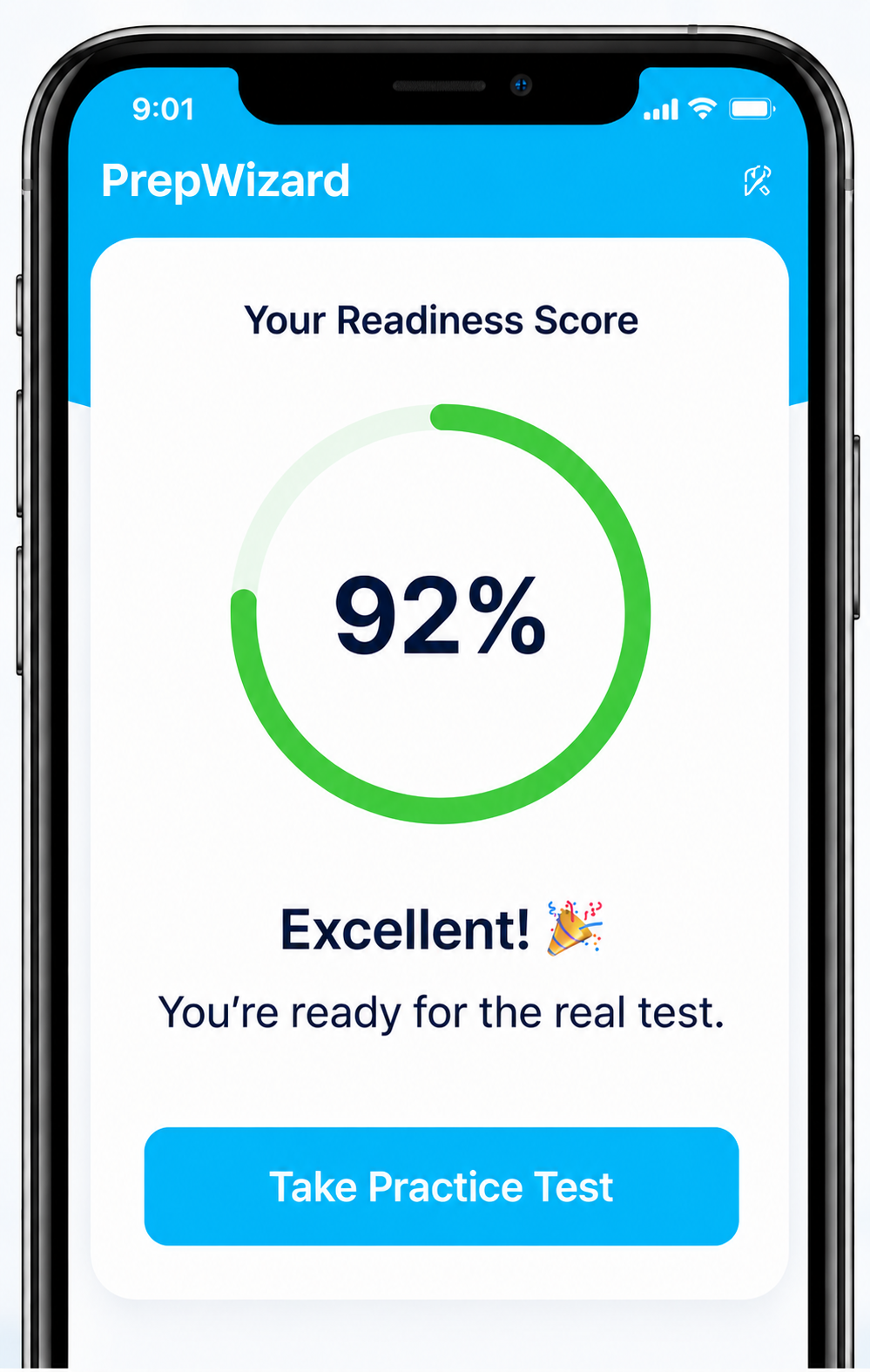
Each Teendrivingcourse.com purchase includes a 3-day PrepWizard trial. It gives you a structured way to practice instead of relying only on reading the North Carolina Driver's Handbook.
With PrepWizard, you can:
- Practice North Carolina-specific questions covering traffic laws, safe-driving rules, and road signs
- Take timed practice exams
- Use Focus Mode to concentrate on subjects you repeatedly miss
- Track your practice progress
- Study from a computer, tablet, or smartphone
Using several focused practice sessions before your DMV appointment can help you become more comfortable with the question format and identify areas that still need review.
Where Teendrivingcourse.com Fits in North Carolina
Teendrivingcourse.com is a supplemental learning resource, not North Carolina's required driver education program. It does not replace the approved driver education course that teens must complete before receiving a Level 1 permit, and it does not issue the state's Driver's Education Certificate.
The value of the course is preparation. You can use it to study traffic rules, hazard recognition, right-of-way, and defensive-driving habits before your official driver education, permit tests, and supervised practice begin.
North Carolina's licensing system combines formal driver education, DMV testing, supervised driving, and progressively fewer restrictions. Teendrivingcourse.com can serve as an additional study resource throughout those stages without being presented as a replacement for the state's approved requirements.



 Sample readiness screen