
Complete your Pennsylvania driver education course online.
Work through the classroom portion online and complete the required coursework. Pennsylvania's standardized driver education program includes at least 30 hours of classroom instruction.

ONLINE TEEN DRIVER EDUCATION
FLEXIBLE ONLINE DRIVER EDUCATION
FOR NEW DRIVERS IN PENNSYLVANIA.
Take the course on any device. Your progress is saved automatically.
Work through the classroom portion online and complete the required coursework. Pennsylvania's standardized driver education program includes at least 30 hours of classroom instruction.
After receiving your learner's permit, build your driving experience under proper supervision. If you are completing an approved Pennsylvania driver education program, the standardized program includes at least 6 hours of behind-the-wheel instruction.
After holding your permit for the required six months and completing at least 65 hours of supervised driving, including nighttime and bad-weather practice, you can take the road test when eligible. With an approved driver education course and a qualifying driving record, you may apply for an unrestricted license before age 18.
Choose the course that fits your Pennsylvania learning goals.
Compare approval, the total cost, and the help you’ll get along the way.
Review current Pennsylvania options and prices.
Ask what’s included before you enroll.
Take the next step toward confident driving in Pennsylvania.
Find your course and start building good habits.
Review your course details and price before you enroll.

Short study sessions that fit around school and family life.
Pick up where you left off, on your own schedule.
Review your course and completion details before you enroll.
Our team can help with course, account, and certificate questions.
Quick answers for Pennsylvania teens and parents.
Find more help on our full FAQ page.
You can apply for a Pennsylvania learner's permit when you are 16. You must complete the required application, physical examination, vision screening, and knowledge test.
The knowledge test has 18 multiple-choice questions. You need at least 15 correct answers to pass.
No. Driver education is not required simply to obtain the junior license, but an approved driver education course is required if you want to qualify for the regular license before age 18.
If you are under 18, you need at least 65 hours of supervised skill-building. The total must include at least 10 hours at night and 5 hours in bad weather.
You must hold your learner's permit for at least six months before taking the road test for a junior driver's license.
Pennsylvania's standardized driver education program includes at least 6 hours of professional behind-the-wheel instruction. This is separate from the 65 hours of supervised practice required for drivers under 18.
Online driver education is available, including Pennsylvania courses listed by Teendrivingcourse.com. If you need the course for an early unrestricted license, verify that the specific course is approved for that purpose before enrolling.
Yes. Teendrivingcourse's Pennsylvania pages state that a certificate of completion is sent after you complete the online course.
No. The online classroom portion does not replace the learner's permit process, supervised driving, road test, or other Pennsylvania licensing requirements. If you are pursuing the early unrestricted-license option, the driver education course must meet Pennsylvania's approval requirements.
A supervising driver generally must be at least 21 and licensed, or may be a licensed parent, guardian, person in loco parentis, or spouse who is at least 18. The supervising driver must sit in the front seat.
If you are under 18, you must first complete the six-month permit period and the required 65 hours of supervised driving, including the required nighttime and bad-weather hours. You must also bring the required documentation to the test.
If you are under 18, Pennsylvania requires you to wait seven days before taking the road test again. You have three attempts with each learner's permit before additional permit action is required.
You may qualify before 18 after holding your junior license for at least one year, completing an approved driver education course, maintaining the required crash- and violation-free record, and obtaining the required consent. The earliest qualifying age is 17½.
Young drivers generally cannot drive between 11 p.m. and 5 a.m., except for specified purposes, and passenger restrictions apply during the first six months. The passenger limit can increase after six months if the driver continues to meet the applicable requirements.
Pennsylvania's Paul Miller's Law prohibits drivers from using hand-held interactive mobile devices while driving, including when temporarily stopped in traffic. Hands-free use is permitted for certain functions, such as calls and GPS, subject to the law's requirements.
Licensing information: PennDOT Driver and Vehicle Services →
Find your next step, or get help from our team.
Pennsylvania uses a graduated licensing system for young drivers. You can apply for a learner's permit beginning at age 16. After holding the permit for at least six months and completing the required supervised driving experience, you can take the road test for a junior driver's license.
Driver education is not required simply to obtain the junior license. However, completing an approved driver education program can allow an eligible junior license holder to apply for a regular, unrestricted license before turning 18. To qualify for the early upgrade, you must have held your junior license for at least one year, completed an approved driver education course, and maintained the required crash- and violation-free record. If you do not qualify for the early upgrade, your junior license becomes a regular license automatically at age 18.
The basic progression is:
Pennsylvania's standardized driver education program consists of a minimum of 30 hours of classroom instruction and a minimum of 6 hours of behind-the-wheel instruction. The classroom portion teaches topics such as decision-making, driving strategies, Pennsylvania driving laws, adverse conditions, alcohol and other drugs, financial responsibility, and vehicle maintenance.
The 6-hour in-car component provides supervised instruction in an approved driver education vehicle. Pennsylvania's program requirements distinguish this professional instruction from the additional practice hours that young drivers must complete with a parent, guardian, or another qualified supervising driver.
An online course can make the classroom portion more convenient, but you should confirm that the specific course you choose is an approved Pennsylvania driver education program if you intend to use it for the early unrestricted-license option.
Teendrivingcourse.com currently lists Pennsylvania online driver education courses and a certificate of completion. Its Pennsylvania pages also state that the course may be sufficient for driver education requirements in some states but may be supplemental to state-approved training in others. For Pennsylvania, confirm that the specific Teendrivingcourse program and certificate meet the approval requirements before relying on it for the early unrestricted-license application.
You cannot apply for a Pennsylvania non-commercial learner's permit before your 16th birthday. The application process begins with the Non-Commercial Learner's Permit Application, Form DL-180.
Before going to a PennDOT Driver License Center, you must have the physical examination section of the application completed by an appropriate health care provider. If you are under 18, you also need the required parent or guardian consent form.
You will then need to:
The Pennsylvania knowledge test contains 18 multiple-choice questions. You must answer at least 15 correctly to pass.
Once you receive your learner's permit, you may begin supervised driving practice. A supervising driver generally must be at least 21 years old and licensed, although Pennsylvania also permits a licensed parent, guardian, person in loco parentis, or spouse who is at least 18 to supervise. The supervising driver must sit in the front seat.
If you choose an approved Pennsylvania driver education program, the standardized classroom portion requires at least 30 hours of instruction. The curriculum covers the knowledge and decision-making skills you need as you begin driving.
Teendrivingcourse.com offers Pennsylvania online driver education and states that a certificate of completion is provided after completing the course. Its Pennsylvania pages list the course at $95 and describe certificate delivery by regular mail or available FedEx options.
Because Pennsylvania requires an approved driver education course for the early unrestricted-license pathway, verify the approval status of the specific Teendrivingcourse Pennsylvania program before enrolling for that purpose. The certificate should not be assumed to qualify for the early upgrade solely because an online course is available.
Classroom education is only one part of Pennsylvania's standardized driver education program. The approved program also includes at least 6 hours of professional behind-the-wheel instruction.
Professional behind-the-wheel instruction is separate from the 65 hours of supervised driving practice that Pennsylvania requires from drivers under 18. The two requirements serve different purposes: instructor-led training provides professional driving instruction, while supervised practice gives you additional time to develop your skills behind the wheel.
If you are using an online classroom course, make sure you know where and how you will complete any required in-car training before relying on the course for an approved driver education pathway.
Pennsylvania requires drivers under 18 to complete at least 65 hours of supervised skill-building before taking the road test. Those 65 hours must include at least 10 hours of nighttime driving and at least 5 hours of driving in bad weather.
Your parent or guardian must certify the required driving experience on the appropriate PennDOT form. Keep an accurate record of your practice because the certification is required before you can take the road test.
You also need to hold your learner's permit for at least six months before taking the road test for your junior license.
The required practice should give you experience in different conditions and situations, including nighttime and bad-weather driving. These additional hours are separate from the minimum 6 hours of professional behind-the-wheel instruction included in Pennsylvania's standardized driver education program.
After completing the six-month learning period and the required 65 hours of supervised driving, you can take the road test when eligible. Drivers under 18 must provide the required certification of their supervised driving hours.
PennDOT allows eligible drivers to schedule the road test in advance. Pennsylvania also certifies third-party businesses to administer the skills test. These third-party examiners are PennDOT-certified, and the skills test is the same type of test administered at a PennDOT Driver License Center.
Your test vehicle must meet Pennsylvania's requirements, including valid registration and insurance. The vehicle is also checked for required safety equipment and applicable inspection requirements before the test.
If you are under 18 and fail the road test, Pennsylvania requires a seven-day waiting period before you can take it again. You have three chances with each learner's permit before you must take additional steps to extend or replace the permit.
Once you pass the road test, you can receive a Pennsylvania junior driver's license. The junior license comes with additional restrictions that apply to young drivers.
To obtain a regular license before age 18, you must have held your junior license for at least one year, completed an approved driver education course, remained free of a qualifying crash and Vehicle Code conviction for the required one-year period, and obtained the required parental or guardian consent. You then submit Form DL-59 to PennDOT.
The minimum age for this early regular-license option is 17½ because Pennsylvania requires the junior license to have been held for one year after the six-month permit period.
If you do not complete an approved driver education course or otherwise do not qualify for the early upgrade, your junior license automatically becomes a regular license when you turn 18.
A Pennsylvania junior license includes restrictions that are important for new drivers to understand.
Young drivers with a junior license generally may not drive between 11:00 p.m. and 5:00 a.m. Exceptions apply for certain employment and volunteer or charitable activities when the required documentation is carried in the vehicle.
During the first six months of a junior license, a young driver is generally limited to one passenger under 18 who is not an immediate family member. After six months, the limit can increase to three such passengers if the driver continues to meet the applicable requirements. Immediate family members are excluded from these passenger limits.
The passenger restriction can continue to apply more strictly when a young driver has been involved in a qualifying crash or received a traffic conviction. The number of passengers can never exceed the number of available seat belts.
Pennsylvania applies additional consequences to young drivers who accumulate points or receive certain serious speeding convictions.
A young driver's license can be subject to a mandatory 90-day suspension after accumulating six or more points or receiving a conviction for driving 26 mph or more over the posted speed limit.
Maintaining a clean driving record is also important if you plan to apply for the regular license before age 18. The early-upgrade requirements include being free of qualifying crashes and Vehicle Code convictions for the required one-year period.
Pennsylvania's Paul Miller's Law prohibits drivers from using hand-held interactive mobile devices while driving. The law took effect June 5, 2025, and prohibits this use even when the vehicle is temporarily stopped because of traffic, a red light, or another momentary delay.
Hands-free functions remain permitted for activities such as making phone calls, using GPS, and listening to music, subject to the law's requirements and exceptions. Since June 2026, drivers convicted under the law can receive a $50 fine plus court costs and other fees.
For a new driver, the safest habit is simple: set up navigation before you leave, keep your phone out of your hand, and avoid interacting with the device while driving.
Pennsylvania requires registered motor vehicles to carry liability insurance. The minimum liability limits are:
These are minimum legal limits, not necessarily the amount of coverage that is appropriate for every family. Adding a teen driver can significantly affect insurance costs, so parents should discuss coverage and available discounts with their insurer.
Completing an approved driver education program may also be relevant when asking an insurance company about available discounts, but eligibility and discount amounts depend on the insurer and policy.
An online classroom course can give you a flexible way to complete the classroom portion of driver education. Teendrivingcourse.com's Pennsylvania pages describe the course as an online driver education program and state that students receive a certificate of completion after finishing the course.
The main advantage of the online format is that you can complete classroom coursework without attending a traditional classroom at a fixed location. However, online classroom instruction does not eliminate Pennsylvania's separate supervised driving requirements or the professional behind-the-wheel component of an approved driver education program.
If your goal is to qualify for an unrestricted license before age 18, verify that the specific Pennsylvania Teendrivingcourse program is approved for that purpose before enrolling. Pennsylvania requires an approved driver education course for the early regular-license application.
The Pennsylvania knowledge test covers traffic signs, Pennsylvania driving laws, driving rules, and safe-driving practices. The test contains 18 multiple-choice questions, and you need at least 15 correct answers to pass.
Before taking the test, study the current Pennsylvania Driver's Manual and make sure you understand the rules that apply to learner's permit holders and young drivers.
The knowledge test is an important first testing milestone, but it is not the same as the road test. Passing the knowledge test allows you to receive your learner's permit when all other requirements have been satisfied, while passing the road test is required before receiving a junior driver's license.
Plan your visit using the official state resources below. Check the location, available services, and appointment instructions before you travel. Licensing offices and appointments are managed by the state agency.
Build confidence one question at a time. Try a few practice questions, then keep preparing for your Pennsylvania knowledge test.
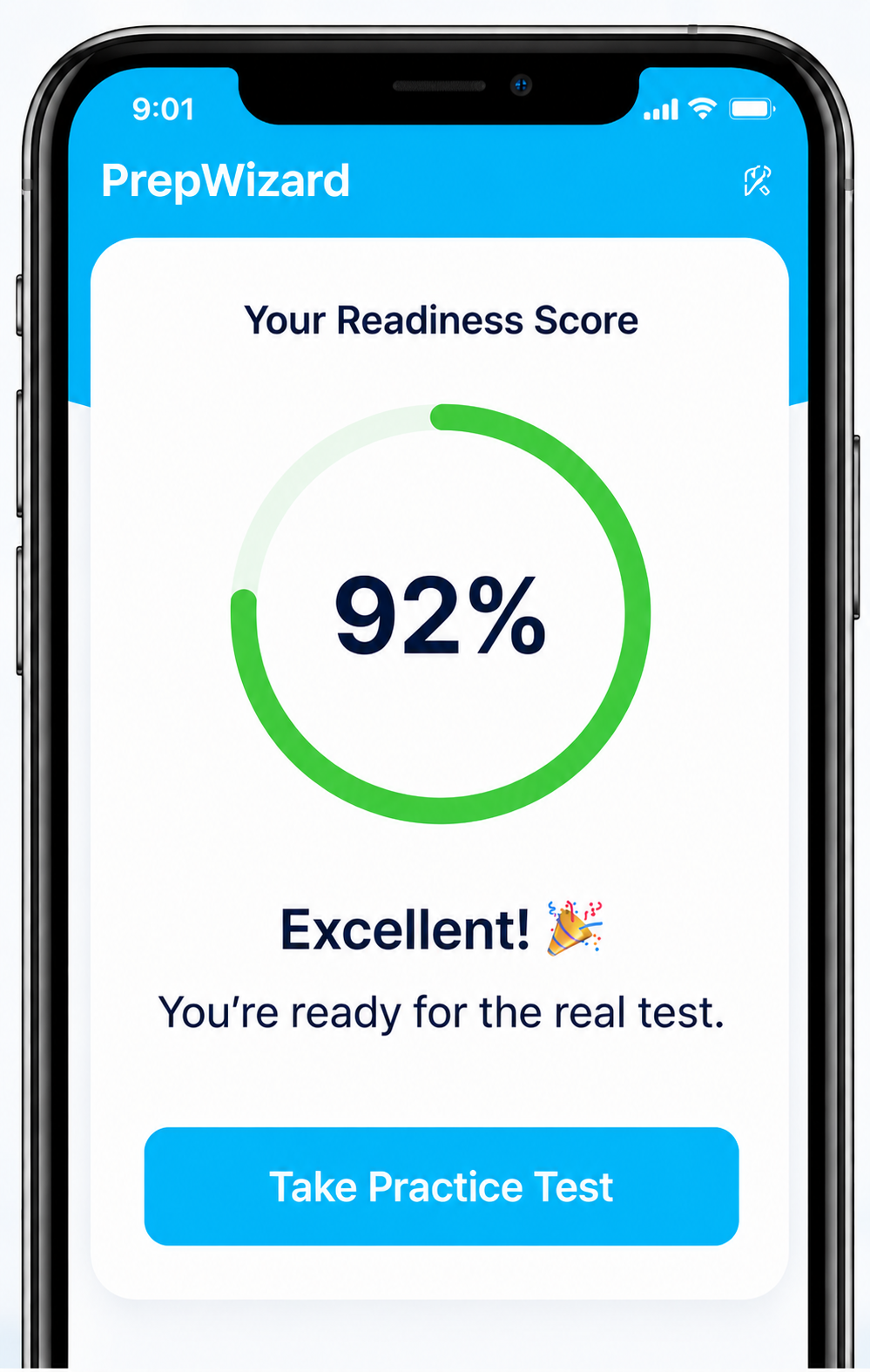 Sample readiness screen
Choose an answer to continue.
Questions about your course? Call 1-800-482-6593.
Choose your county or area to find local driver education information and links to its cities and communities.
Place names and county relationships: 2020 U.S. Census reference files. Includes county equivalents and census-designated communities.