Vermont Online Driver Education
Getting a Driver's License in Vermont: The Basics
Vermont's graduated licensing system begins with a Learner's Permit at 15. To move to a Junior Driver's License at 16 or 17, you must hold the permit for at least one year, complete an approved driver education course, complete the required supervised practice, maintain the required clean record, and pass the licensing examination. A full operator's license is available at 18 when the applicable requirements are met.
For applicants under 18, Vermont requires an approved driver education course before a Junior Driver's License can be issued. The course consists of at least 30 classroom hours, 6 hours of behind-the-wheel instruction, and 6 hours of observation. Vermont approves driver education through qualifying high-school programs and licensed commercial driver training schools.
Teendrivingcourse.com is not a Vermont-approved driver education course. It does not replace the required approved instruction, does not provide the state's Driver Education Certificate, and cannot be used in place of the additional supervised practice required before a Junior Driver's License. Its role is supplemental: it can help you prepare for the permit examination and reinforce the defensive-driving knowledge you use during your supervised practice.
The basic path is:
- Learner's Permit: available beginning at age 15 after meeting the application requirements and passing the permit examination.
- Junior Driver's License: available at 16 or 17 after holding the permit for at least one year, maintaining the required clean record, completing approved driver education, completing 40 additional practice hours including 10 hours at night, and passing the required examination.
- Full operator's license: available at 18 when the applicable requirements are met; Vermont's graduated-license restrictions no longer apply at that stage.
How Vermont's Graduated Licensing System Works
Step 1: Get Your Learner's Permit at 15
At age 15, you can apply for a Vermont Learner's Permit with the permission of a parent or legal guardian unless you are an emancipated minor. You must also meet Vermont's documentation requirements and pass the learner permit knowledge examination. Applicants under 18 must have maintained a clean driving record for the previous two years.
After passing the examination and completing the permit application and fee requirements, your receipt can serve as a temporary learner's permit for 90 days while the permanent permit is issued.
While driving with a Vermont Learner's Permit, you must have a qualified supervising driver beside you. Vermont permits supervision by a licensed and unimpaired parent or guardian, a licensed or certified and unimpaired driver education instructor, or a licensed and unimpaired adult who is at least 25 years old.
Step 2: Complete Vermont-Approved Driver Education
Before receiving a Junior Driver's License, every applicant under 18 must successfully complete Vermont's approved driver education and training course. The program requires a minimum of 30 classroom hours, 6 hours of behind-the-wheel instruction, and 6 hours of observation.
Completion is documented through a Driver Education Certificate, and the instructor must record your completion in Vermont's Driver Education Certification Service before the DMV can administer a qualifying road test.
Teendrivingcourse.com does not satisfy this requirement. Its online lessons are supplementary preparation and should not be represented as Vermont-approved driver education.
Step 3: Complete Your Permit Year and 40 Hours of Practice
Vermont requires you to hold the Learner's Permit for at least one year before obtaining a Junior Driver's License. During that period, you must complete an additional 40 hours of supervised driving, including at least 10 hours of nighttime driving. The 40 practice hours are separate from the six hours of behind-the-wheel instruction included in the approved driver education course.
Nighttime driving is specifically defined by Vermont as driving from 30 minutes after sunset until 30 minutes before sunrise. Your parent, guardian, instructor, or other qualifying supervising driver must certify the additional practice.
You must also maintain a clean record without Learner's Permit recalls, suspensions, or revocations for the six months immediately before obtaining the Junior Driver's License.
Step 4: Get Your Junior Driver's License
Once you have held your Learner's Permit for at least one year, completed the approved driver education course, completed the additional 40 hours of supervised practice, and maintained the required clean record, you can proceed with the Junior Driver's License examination. Your parent or legal guardian must give permission unless you are emancipated.
The Junior Driver's License gives you greater independence, but Vermont still applies graduated restrictions during your first six months of driving. These rules primarily concern passengers, employment-related driving, and electronic-device use.
Step 5: Move to a Full Operator's License at 18
A Vermont Junior Driver's License remains subject to the state's graduated-license provisions until you reach 18. Vermont DMV states that an individual must be 18 years old to obtain a regular Driver's License and must not have had recalls, suspensions, or revocations during the previous six months.
At that point, the junior-license passenger and employment restrictions no longer apply in the same way because you have moved beyond the graduated licensing stage.
Vermont Teen Driving Laws You Should Know
Junior Driver's License Passenger Restrictions
Vermont gradually increases the number of passengers a Junior Driver's License holder may carry.
During the first three months, you generally cannot carry passengers unless a qualifying supervising adult is riding beside you. During the second three months, you may begin transporting immediate family members. After you have held the Junior Driver's License for six months, there is no longer a graduated passenger-number restriction, although you may never carry more people than there are available safety belts.
Vermont Has No Junior-License Nighttime Curfew
Unlike many graduated-license systems, Vermont's current graduated-license rules do not establish a general nighttime driving curfew for Junior Driver's License holders. Instead, Vermont places graduated restrictions on passengers and certain types of driving, including employment-related driving during the first year.
The absence of a curfew does not mean a junior driver has unrestricted privileges. The passenger, employment, device, and recall rules still apply.
The Junior License Can Be Recalled
Vermont treats a Learner's Permit and Junior Driver's License as provisional licenses that can be recalled when certain violations occur. Examples include carrying passengers for hire, driving for employment when prohibited, passenger violations, and certain point-related violations. A three-point speeding violation or six-point total can result in a 90-day recall.
That makes maintaining a clean driving record important throughout the graduated-license period.
The Electronic-Device Rule
Vermont prohibits the use of a portable electronic device while operating a motor vehicle. The restriction covers activities such as reading or manually composing and sending electronic communications, including texts, instant messages, and emails.
For a new driver, the safest habit is straightforward: put the phone away before driving and leave it there until the vehicle is parked.
Employment Restrictions
A Vermont Junior Driver's License holder cannot operate a vehicle as part of employment for the first year after receiving the license, or until reaching age 18, whichever comes first. Junior drivers also cannot carry passengers for hire.
This distinction matters for jobs involving driving, such as making deliveries.
Vermont Insurance Requirements
Vermont requires an automobile liability policy or bond of at least $25,000 for one person, $50,000 for two or more people, and $10,000 for property damage in one crash. Vermont law also requires uninsured and underinsured motorist protection, with minimum bodily-injury coverage for new or renewed policies of $50,000 per person and $100,000 per accident.
Before a teen starts driving, review the family policy and make sure the vehicle and coverage meet Vermont's requirements.
Prepare for Your Vermont Permit Test With PrepWizard
The Vermont learner-permit process includes a knowledge examination based on the state's Driver's Manual. The DMV identifies the manual as the reference for obtaining a learner's permit, making it an important part of your preparation.
Every Teendrivingcourse.com purchase includes a 3-day PrepWizard trial. It gives you an additional way to practice test-style questions before taking the official permit examination.
With PrepWizard, you can:
- Practice Vermont-specific questions covering traffic rules, safe driving, and road signs
- Complete timed practice exams
- Use Focus Mode to concentrate on topics you repeatedly miss
- Track your practice progress
- Study from a computer, tablet, or smartphone
Using focused practice before your permit test can help you identify areas that need additional review before the actual examination.
Where Teendrivingcourse.com Fits in Vermont
Teendrivingcourse.com is a supplemental online study resource, not a Vermont-approved driver education course. Vermont requires applicants under 18 to complete an approved program before obtaining a Junior Driver's License, and that program must meet the state's classroom, behind-the-wheel, and observation requirements.
Teendrivingcourse.com does not replace those requirements or provide the Driver Education Certificate that must be recorded before the road test. The official course must come from a qualifying high-school program or licensed commercial driver training school.
The online course can instead supplement your preparation. It can reinforce defensive-driving techniques, hazard recognition, right-of-way rules, and safe-driving habits before your permit test and while you complete supervised practice.
Your official Vermont requirements remain separate: hold the permit for at least one year, complete approved driver education, complete the additional 40 hours of supervised practice including 10 hours at night, maintain the required record, and complete the licensing examination.




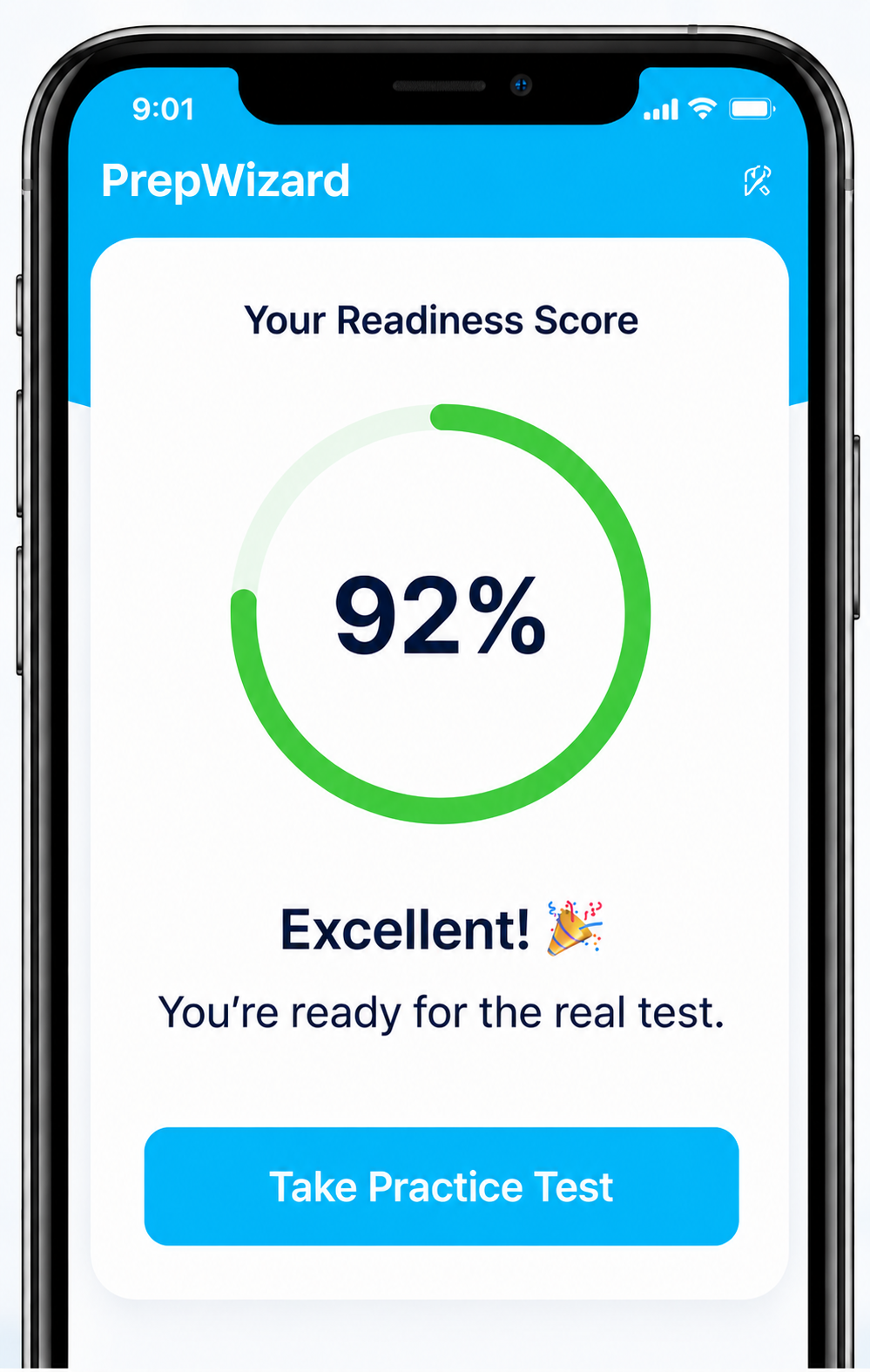 Sample readiness screen